Security evidence that shortens reviews and lowers your liability.
QuickChain helps leaders answer the questions behind procurement, assessment readiness, release governance, and cyber-insurance review, with evidence that holds up to technical scrutiny.
Every recent settlement was a self-assessment that did not match reality
The Department of Justice has settled a run of False Claims Act cases where the contractor's SPRS score or System Security Plan overstated its NIST SP 800-171 posture. Each was a payment out, not a rounding error, and the exposure is in force today regardless of the CMMC certification timeline.
Three places QuickChain pays for itself
The case is strongest when a contract depends on a passing review, review requests are frequent, or senior compliance and engineering time is already scarce.
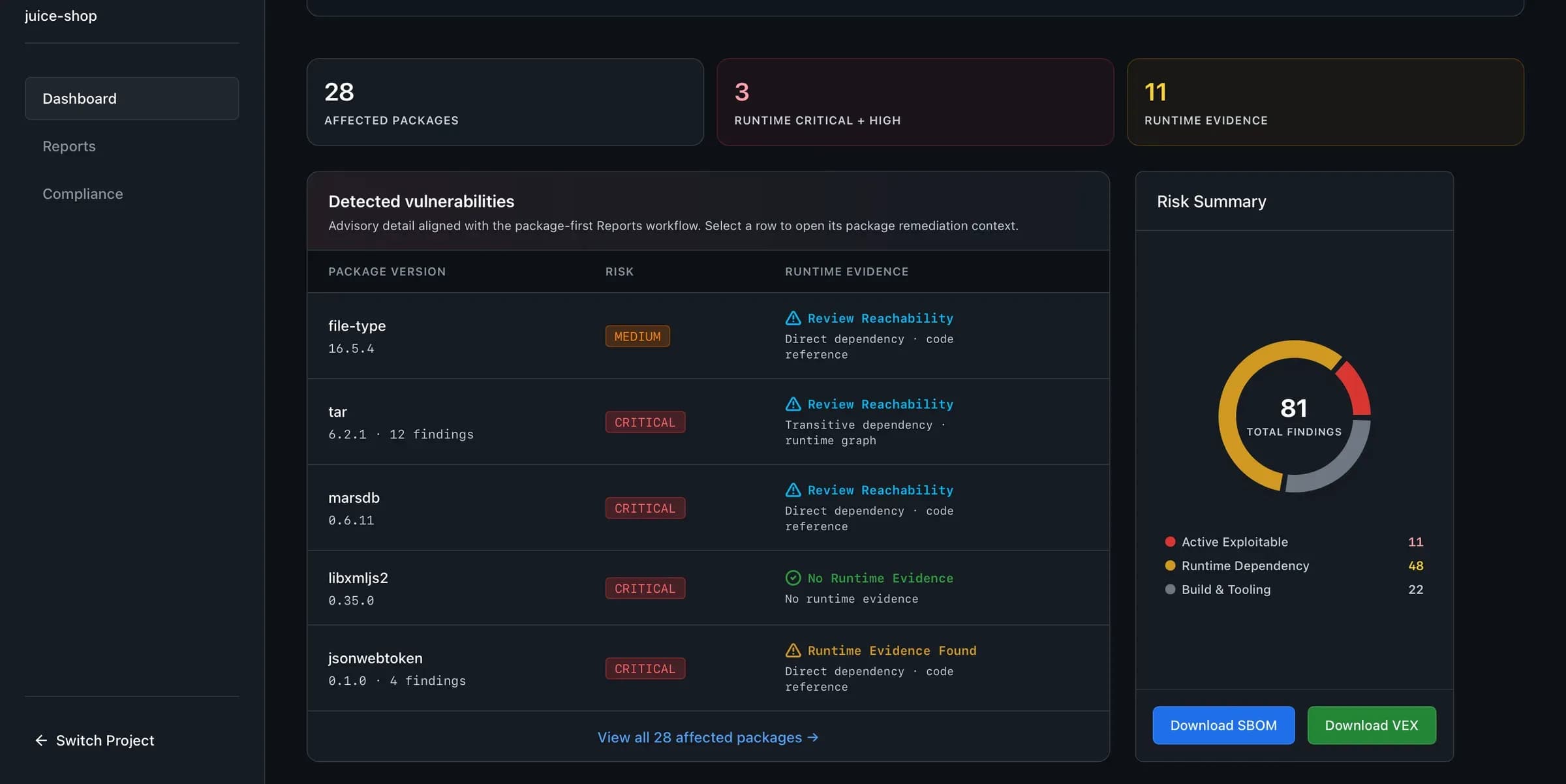
Faster procurement and assessor response
SBOM, VEX, executive summaries, and compliance drafts come from the same scan instead of being rebuilt by hand for every review.
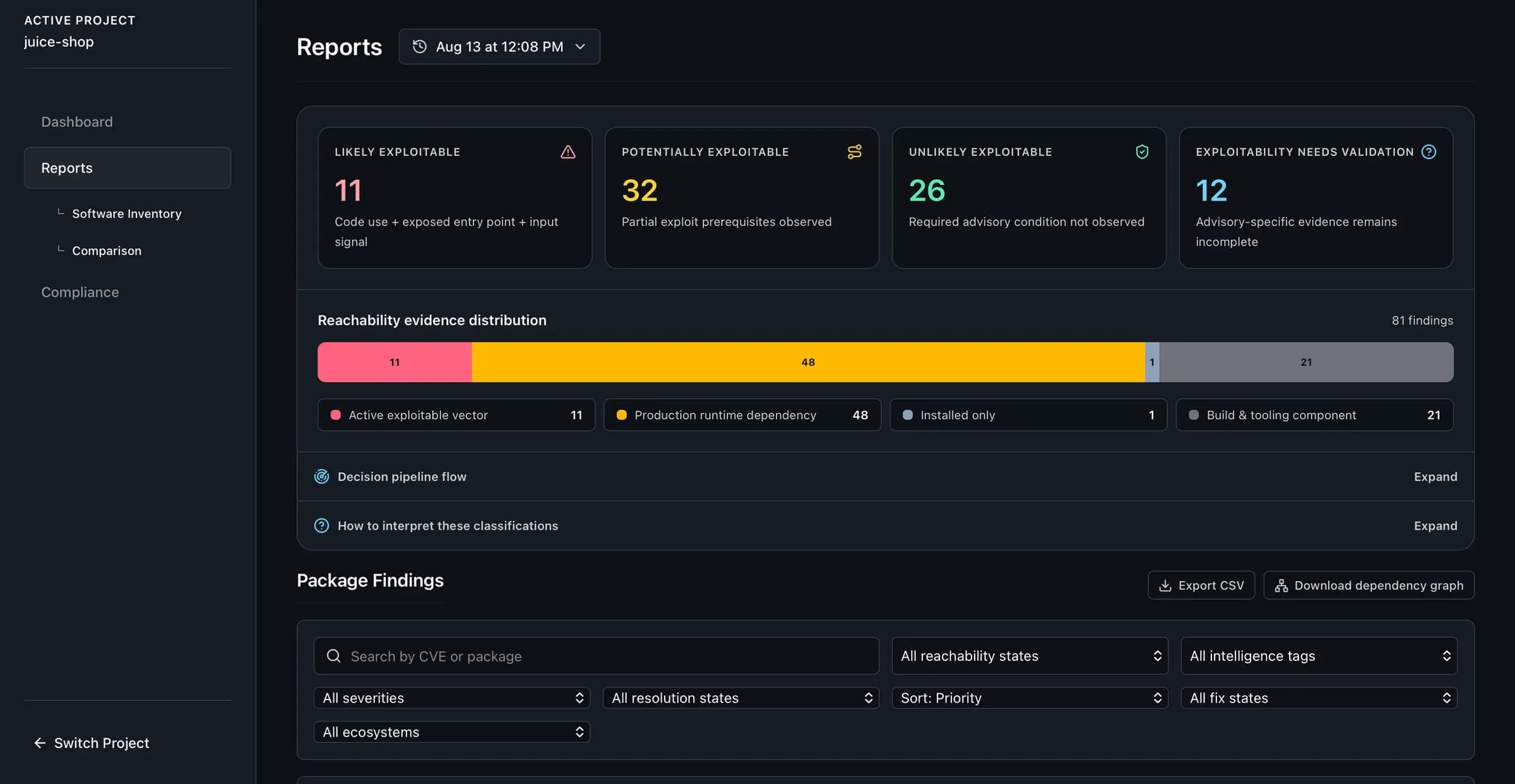
Less low-value remediation work
Reachability and fix-version evidence separate urgent dependency risk from findings that only need a documented review status.
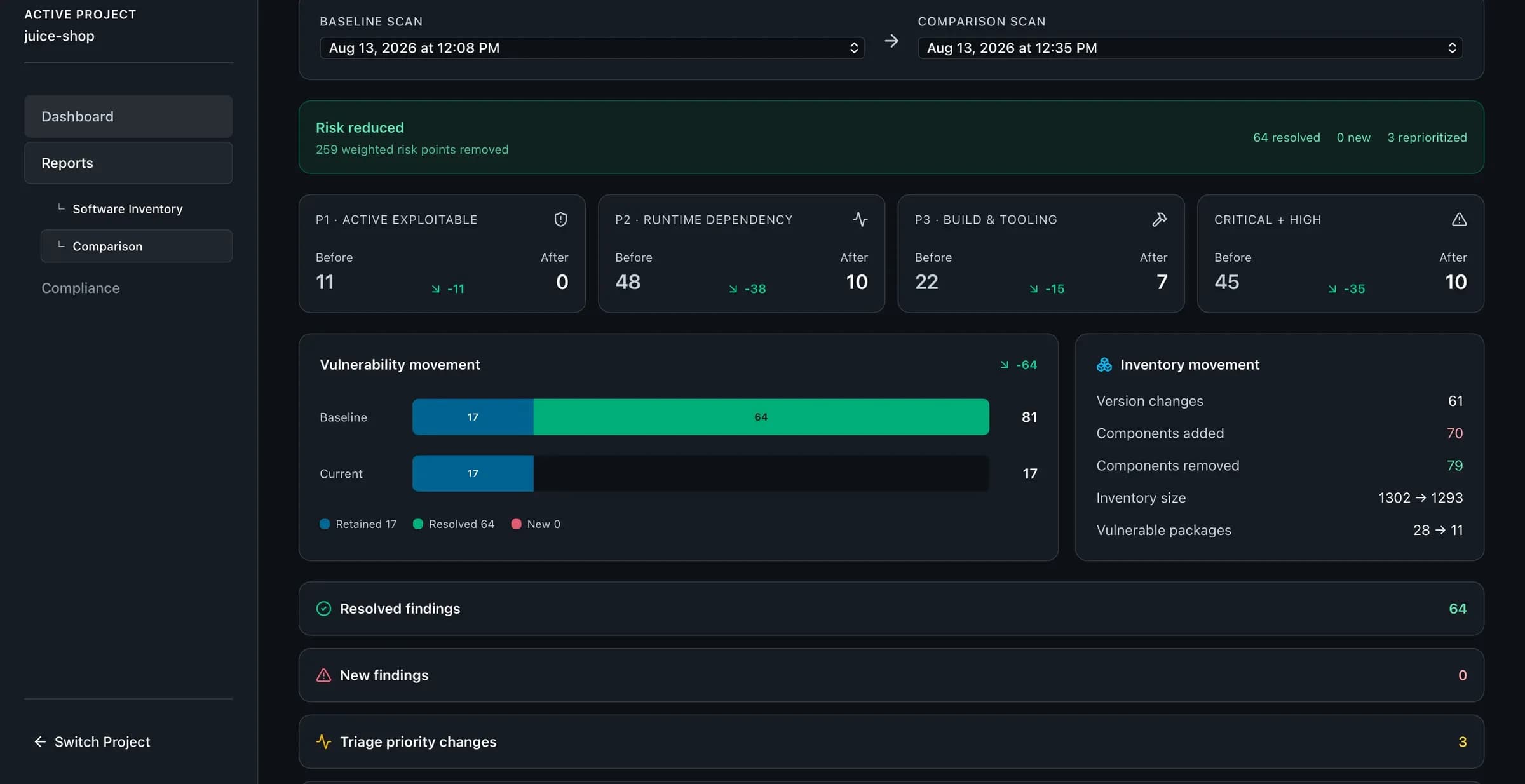
Defensible risk conversations
Leaders get a clear view of exposure and improvement over time without flattening the technical evidence reviewers still expect to see.
The same evidence answers whoever is asking
Pick who is at the table. The deliverable QuickChain hands them comes from the same repository scan.
“Show your software supply-chain controls and the evidence behind them.”
- A control-by-control crosswalk to NIST SP 800-171 and 800-53 with the scan evidence attached to each.
- A POA&M of runtime-confirmed weaknesses with milestone fields ready for owner assignment.
- A frozen evidence snapshot tied to one scan, so the package does not drift mid-review.
Put a number on an audit-ready evidence package
Prefilled with a conservative mid-market DIB scenario. Tune the compliance labor, timeline, contract exposure, and engineering assumptions to your program.
Prefilled with a conservative mid-market DIB scenario. Tune it to your program.
Compliance labor ($21,700) plus engineering triage time ($43,400). This is the conservative number: it excludes the revenue and timeline value below.
to an audit-ready software supply-chain package.
contract value riding on a passing assessment.
A model, not a quote. Compliance-labor estimates draw on typical CMMC Level 2 SSP and POA&M effort; triage savings assume static reachability removes findings with no execution path.
Start with a 90-day pilot, credited toward Year 1
QuickChain starts with a paid Audit-Readiness Pilot. When the evidence workflow becomes part of the business, it moves to an annual subscription scoped to your environment, and the pilot fee is credited in full.
A contained proof of value against the repositories, controls, and review that matter now.
- Selected repository scan scope, sized to your enclave
- Full evidence set: SBOM, OpenVEX, OSCAL, POA&M, SSP appendix, risk memo
- Weekly working session and an evidence walkthrough for your security, engineering, and compliance leads
For teams making QuickChain part of the recurring evidence and assessment-readiness workflow. The pilot fee is credited against Year 1.
- Recurring scans and refreshed evidence packages for the covered systems
- Assessment-ready OSCAL, POA&M, and SSP inputs on every scan
- Risk-reduction reporting for leadership and underwriting conversations